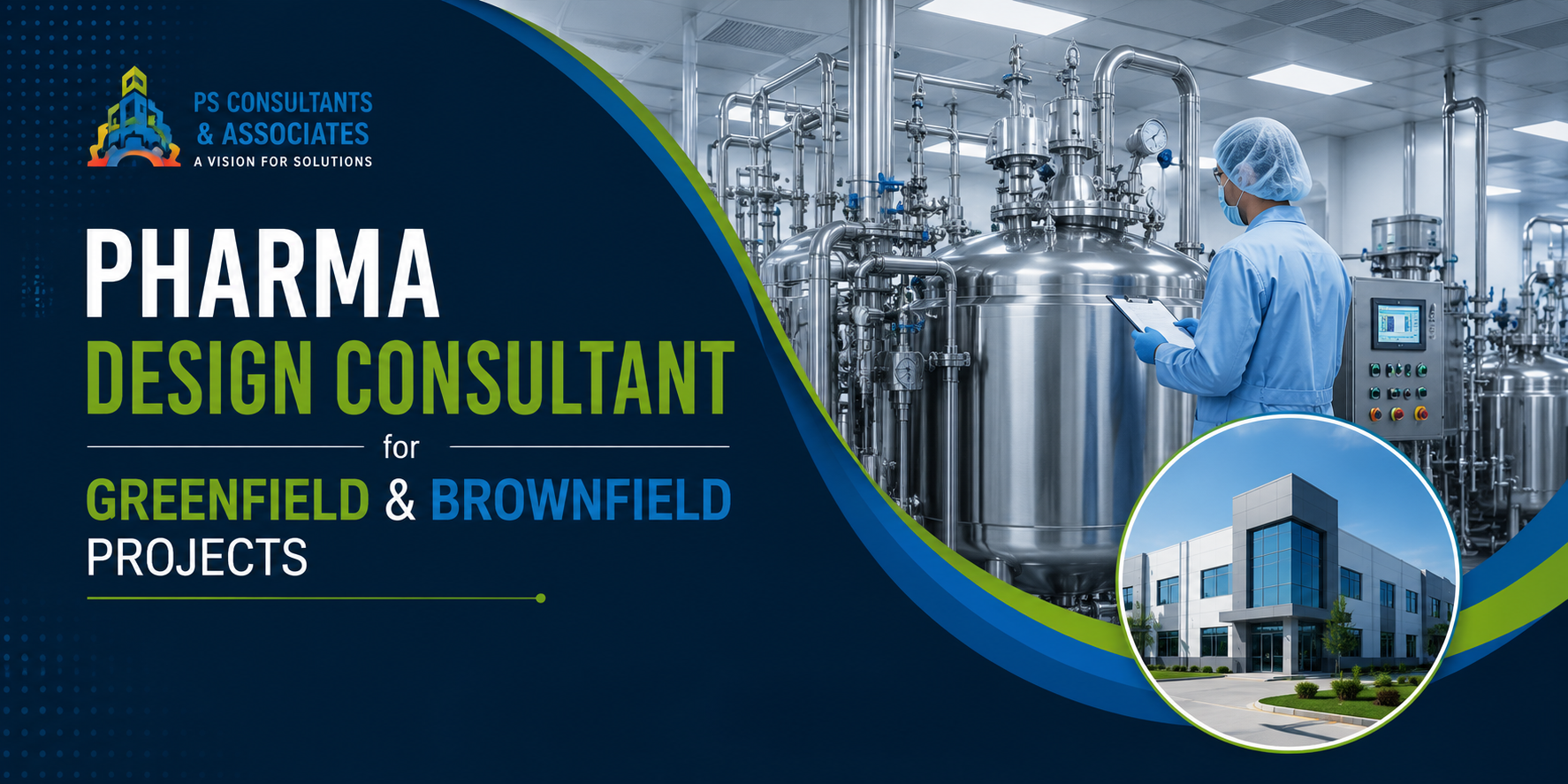
The pharmaceutical industry operates under some of the most stringent design, safety, and regulatory standards in the world. Whether you are building a state-of-the-art manufacturing facility from scratch or upgrading an existing plant, the expertise of a pharma design consultant is not just valuable, it is indispensable.
From navigating Good Manufacturing Practice (GMP) guidelines and cleanroom classifications to managing complex retrofits without halting production, pharma design consultants bridge the gap between regulatory compliance and operational efficiency. This blog explores their critical role in both greenfield and brownfield pharmaceutical projects, and why investing in the right consultancy can determine the success or failure of your facility.
What Is a Pharma Design Consultant?
A pharma design consultant is a specialized professional or consultancy firm that provides technical, regulatory, and engineering expertise for the planning, design, and execution of pharmaceutical facilities. Their scope covers:
- Facility master planning and space programming
- GMP-compliant architectural and engineering design
- Cleanroom classification and HVAC design (HVAC, HEPA filtration, pressure cascades)
- Process flow optimization and contamination control
- Regulatory documentation, User Requirement Specifications (URS), Design Qualification (DQ), Validation Master Plans (VMP)
- Project management and commissioning support
A pharma design consultant acts as the technical authority who ensures that every design decision aligns with global regulatory frameworks such as WHO, US FDA 21 CFR, EU GMP Annex 1, and Schedule M (India).
Greenfield Pharma Projects: Building from the Ground Up
What Is a Greenfield Project?
A greenfield project involves constructing a completely new pharmaceutical facility on undeveloped land. There are no existing structures, legacy systems, or operational constraints to work around, it is a blank slate.
Role of a Pharma Design Consultant in Greenfield Projects
1. Site Selection and Feasibility Analysis — Before a single brick is laid, a pharma design consultant evaluates site suitability, proximity to utilities, soil conditions, flood risk, access for logistics, and local regulatory environment. A poor site selection can result in millions in avoidable costs down the road.
2. Facility Master Planning — The consultant develops a comprehensive master plan that maps out current needs alongside future expansion. This includes zoning of manufacturing, utilities, warehousing, QC laboratories, administration, and waste management areas, all designed for logical material and personnel flows.
3. GMP-Compliant Design from Day One — In greenfield projects, consultants have the freedom to embed GMP principles into the very foundation of the facility. This includes:
- Segregated zones for different manufacturing categories (sterile, non-sterile, cytotoxic)
- Directional airflow design and pressure differential cascades
- Dedicated corridors for personnel, materials, and waste
- Appropriate cleanroom classifications (ISO 5–8) for each production zone
4. Utility and Infrastructure Design — Purified Water (PW), Water for Injection (WFI), Clean Steam, compressed air, and HVAC systems must be designed to pharmaceutical standards. A consultant ensures utility systems are designed for reliability, validation readiness, and lifecycle cost efficiency.
5. Regulatory Documentation and Approval Support — Greenfield projects require extensive documentation, from building plan approvals to drug manufacturing license applications. A pharma design consultant prepares and manages all GMP documentation, helping clients secure regulatory approvals faster.
Brownfield Pharma Projects: Upgrading the Existing
What Is a Brownfield Project?
A brownfield project involves modifying, renovating, or expanding an existing pharmaceutical facility. The challenge here is significant, changes must be made within a live, operational environment while maintaining product quality, ensuring worker safety, and avoiding regulatory violations.
Role of a Pharma Design Consultant in Brownfield Projects
1. Facility Audit and Gap Analysis — The starting point for any brownfield engagement is a thorough audit of the existing facility. The consultant assesses:
- Compliance gaps against current GMP standards
- Structural and utility limitations
- Airflow patterns and contamination risks in existing layout
- Age and condition of HVAC, electrical, and process systems
This gap analysis forms the baseline for a prioritized upgrade roadmap.
2. Phased Renovation Planning — One of the most complex aspects of brownfield projects is maintaining production continuity. A skilled pharma design consultant develops phased renovation plans that allow sections of the facility to be upgraded in sequence, minimizing downtime and production loss while keeping the site operational and compliant throughout the process.
3. Regulatory Remediation — Older facilities often operate under outdated or lapsed regulatory approvals. Consultants manage the process of realigning the facility with current WHO, FDA, or EU GMP standards, including preparing updated site master files, change control documentation, and facility qualification protocols.
4. Capacity Expansion and Technology Upgrades — Brownfield projects often include the integration of new manufacturing technologies, continuous manufacturing lines, isolator-based sterile filling, automated dispensing systems, or new API synthesis equipment. The consultant manages the design, space allocation, utility integration, and validation of these new technologies within existing infrastructure.
5. Energy Efficiency and Sustainability Optimization — Many legacy pharma facilities are energy-intensive. A pharma design consultant can identify and implement energy-saving retrofits — variable frequency drives on HVAC systems, LED lighting, heat recovery systems, and smart building management systems, that reduce operational costs while meeting sustainability goals.
Why Hire a Specialized Pharma Design Consultant?
Whether your project is greenfield or brownfield, here is why a specialized pharma design consultant delivers measurable value:
Drug regulatory agencies worldwide are tightening inspection standards. A pharma design consultant ensures your facility is designed to pass inspections by WHO, US FDA, EU GMP, or national regulators, reducing the risk of costly observations, warning letters, or import alerts.
Experienced consultants know how to accelerate project timelines by front-loading engineering decisions, preparing regulatory submissions in parallel, and managing vendor qualification processes efficiently.
A good consultant saves far more than their fee by preventing rework, avoiding design errors that surface during validation, and optimizing utility systems for lifecycle efficiency.
Pharmaceutical facility design failures are not just costly, they can result in product recalls, facility shutdowns, or patient harm. A pharma design consultant is your risk management partner throughout the project lifecycle.
From EU GMP Annex 1 (2022 revision) to revised Schedule M (India, 2023), regulatory standards are constantly evolving. A specialist consultant keeps your project aligned with the latest requirements.
Key Services Offered by Pharma Design Consultants
- Feasibility studies and site selection
- GMP facility design (architectural + MEP)
- Cleanroom design and validation support
- HVAC and critical utility design
- Process flow and layout optimization
- Regulatory documentation (DQ, IQ, OQ, PQ)
- Project management and owner's engineer services
- Energy audits and sustainability consulting
- Technology transfer support
Choosing the Right Pharma Design Consultant
When evaluating a pharma design consultant for your greenfield or brownfield project, consider:
- Track Record — Have they delivered similar projects (scale, dosage form, regulatory market)?
- Regulatory Knowledge — Are they current with the regulatory standards applicable to your target markets?
- Integrated Capabilities — Can they handle architecture, MEP engineering, process design, and validation under one roof?
- References — Can they provide client references from comparable projects?
- Local Presence — Do they understand regional construction norms, vendor ecosystems, and regulatory authorities?
Conclusion
Whether you are breaking ground on a new world-class pharmaceutical facility or breathing new life into an aging plant, a pharma design consultant is the cornerstone of a successful project. Their expertise transforms complex regulatory requirements, operational needs, and engineering challenges into facilities that are compliant, efficient, and built to last.
Greenfield projects demand visionary planning; brownfield projects demand pragmatic problem-solving. The best pharma design consultants bring both — and the experience to know which approach applies when.
If you are planning a greenfield development or a brownfield upgrade, partnering with the right pharma design consultant early in the process is the single most important investment you can make.